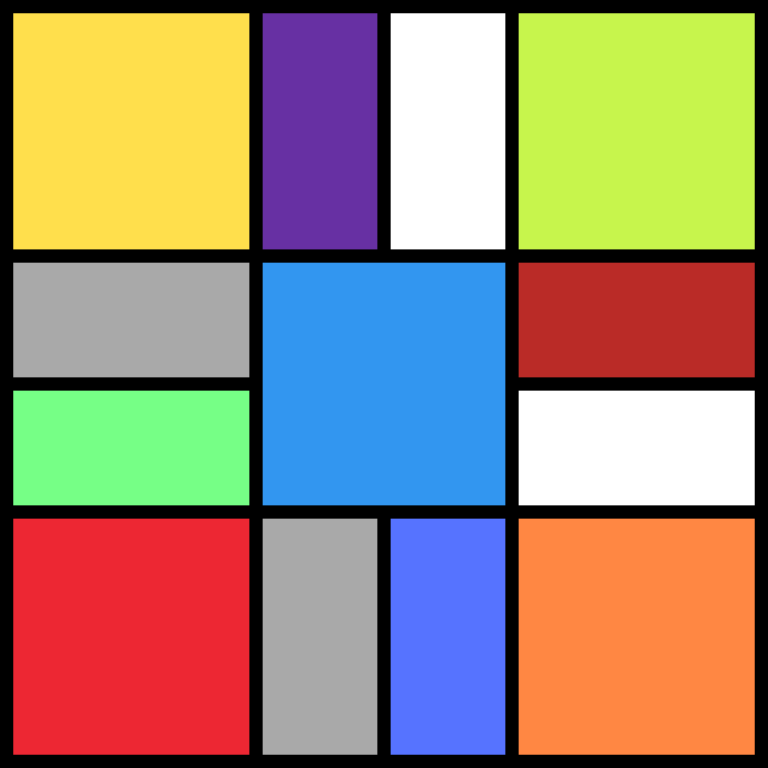
The Chances of Life No. 2 — Zéno Esperce, 2026
Types of artwork
I imagine creating stained-glass pieces, acrylic paintings on canvas, porcelain works, and all sorts of other things.
0. 5 October 2026: Concept for a project
Remember
A cop runs a red light and sends me to hospital: a chance event in life.
A pretty girl sitting opposite me on a train agrees to become my Mentor and help me become proficient in English: a chance event in life.
A guy hires me as a computer engineer… by mistake : another chance event in life.
In 1987, I make a huge mistake that will change my life: I get involved in Artificial Intelligence thirty years too early. Another chance event in life.
My life is full of chance events.
How can I represent this in a visual artwork?
By letting dice decide the shapes, their orientation, and their colours.
There are several moments in the journey.
1. Opera 343
Read the article with your translating browser, sorry.
2. 20 November 2025 : chance and art
As I wake up from my afternoon nap, an idea suddenly strikes me:
- There is a Python program that produces works in the style of Mondrian.
- The program throws virtual dice to decide the shape, colour and orientation of the first element in the artwork.
Then the second, etc. - If a program can do it, I can do it too.
- In a simplified form.
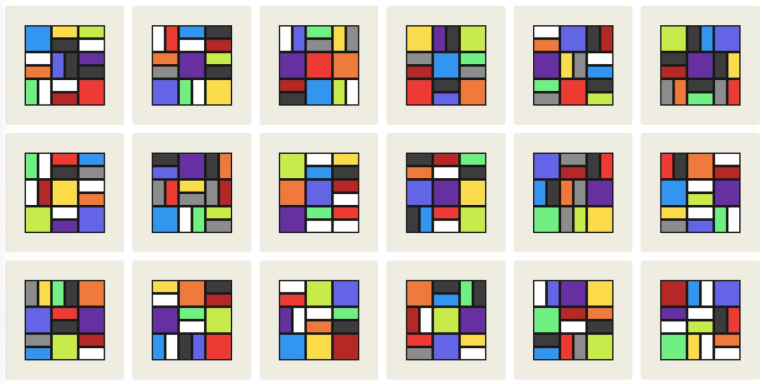
- I decide to make something simple: divide a square artwork into nine equal squares – see image above.
- For each square, I draw lots to determine:
- whether the figure will be a square, a double horizontal rectangle, or a double vertical rectangle;
- for each double rectangle, whether the coloured rectangle will be at the top or bottom, on the left or right;
- for each coloured area, which colour to use from the nine colours of the rainbow;
- the shade of the complementary rectangle: anthracite, grey or white.
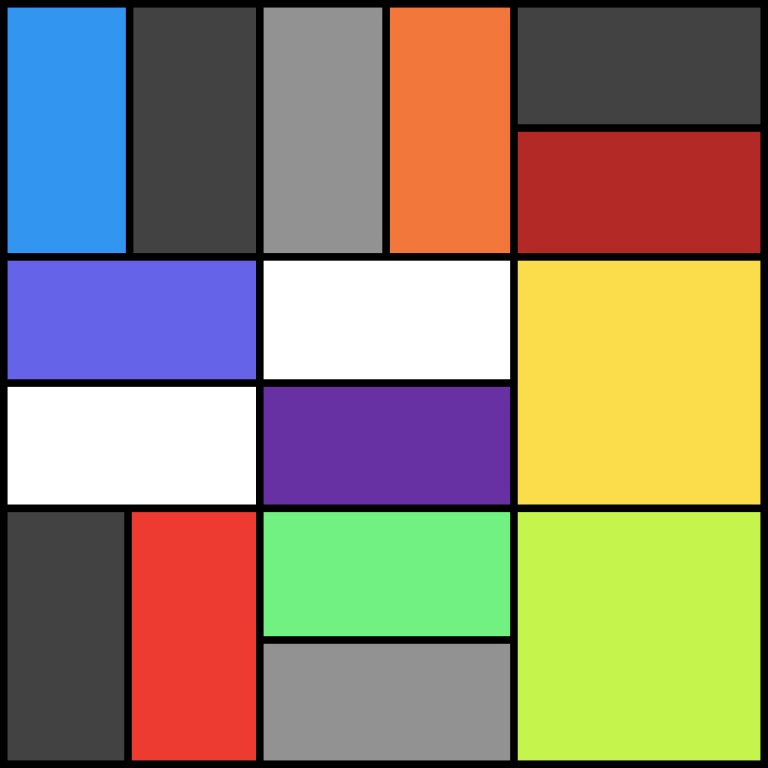
I begin to notice what chance has produced :
- complementary opposites appearing side by side: violet/yellow, red/green;
- three kinds of harmonious colour groupings: cool colours, warm colours, and colours somewhere in between.
I call this process “natural computing.”
3. Natural Computing and the Man in a Hurry
Remember the 343 effect :
For the series The Chances of Life to attract attention, I need to create 343 works !!!
As we saw above, each artwork requires 9 × 4 = 36 random draws.
For 343 artworks, that means more than 12,000 random draws.
Oops!!!
Then I realise that I can return to an old love of mine, dating back to 1979: programming.
I write a Python program that throws the dice for me.
And, as a bonus, it draws the result for me too.